
Cultivation
Our production partner directly cultivates its olive groves in Calabria.
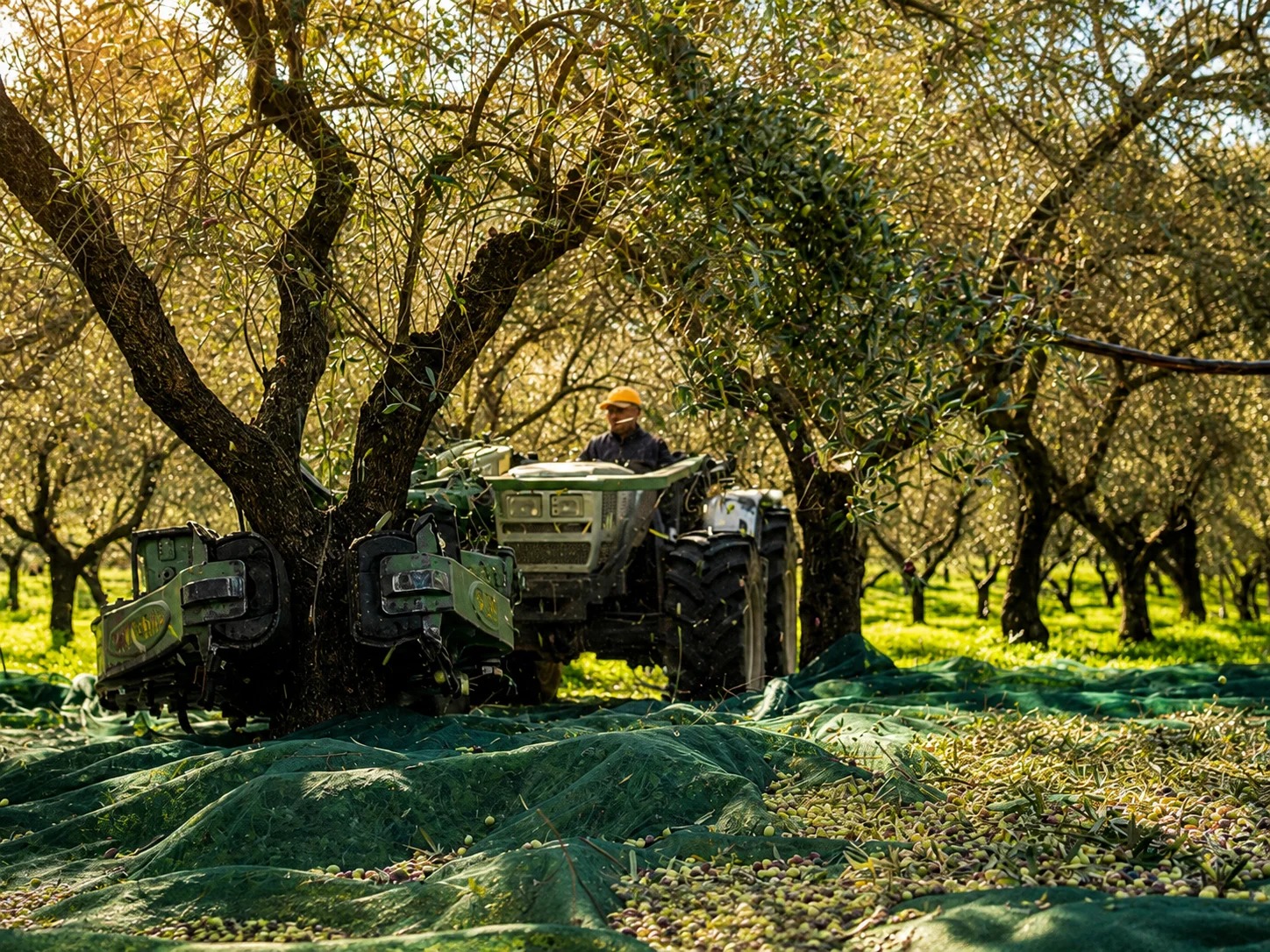
Origin & Production · Calabria
AureoLife is produced for us in Calabria by a fourth-generation family mill, where olive cultivation and milling have shaped the family's work since 1934.
AureoLife Private List
Join the list for considered updates from production, limited releases and the quiet details behind each AureoLife batch.
Join the list
Occasional AureoLife stories, harvest notes and product updates. Unsubscribe at any time. See our privacy notice.
Producer Overview
AureoLife is an Italian olive-oil house. Our oils are produced for us in Calabria by a fourth-generation family mill.
Our production partner follows the olives from harvest through milling, storage and packing. Its documented production protocol sets exact parameters for Carolea. AureoLife will report the composition, harvest information and analysis of each finished production lot separately.
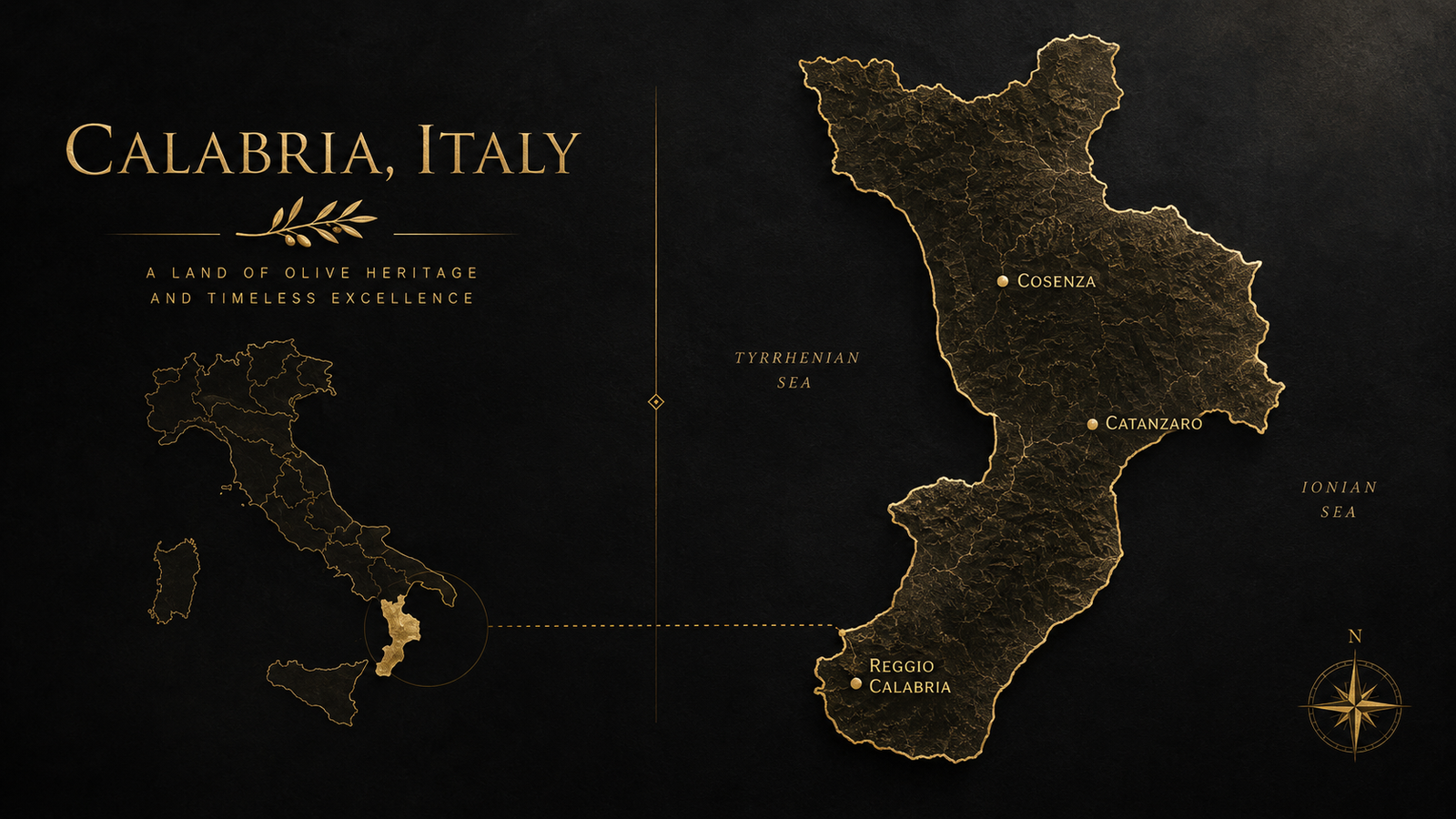
01 · Producer
Our production partner's story began in 1934, joining olive cultivation with the work of transforming olives into oil.
Four generations later, the family continues to cultivate and mill in Calabria, following production from harvest through storage and packing. AureoLife is produced for us within this working tradition.
The mill's documented history follows one family from 1934 to the present day.
Our production partner documents direct oversight from the grove and harvest through processing, conservation and packing.
02 · Place & Groves
Our production partner locates its groves on the hills of the Isthmus of Catanzaro, between the Tyrrhenian Sea and the Sila, and identifies Carolea as the principal cultivar.
The family mill lies within the hills of Calabria's Isthmus of Catanzaro.
The producer documents an average grove altitude of approximately 400 metres. That figure describes its groves generally and is not presented here as a lot-specific claim.
The producer documents an average tree age of approximately 250 years for its groves. AureoLife will identify supplying parcels when lot documentation is available.
03 · Cultivars
Carolea defines our production partner's documented identity and is the cultivar of AureoLife's red monocultivar release.
Our production partner describes Carolea as the cultivar that has characterised its territory for generations. AureoLife will publish tasting language only after the finished 2026 batch has been produced and evaluated.
2026 batch reporting
04 · Family & Mill
Our production partner's documented process is specific about responsibility: the family cultivates, mills, evaluates, conserves and packs. Organic terminology is used for AureoLife products only where the finished product is covered by the applicable certification.
Our production partner directly cultivates its olive groves in Calabria.
The family processes the olives in its own mill and follows the work from harvest onward.
The producer's documented process includes chemical analysis and organoleptic evaluation before packing.
Filtered oil is stored in stainless steel under nitrogen and at controlled temperature until packing.
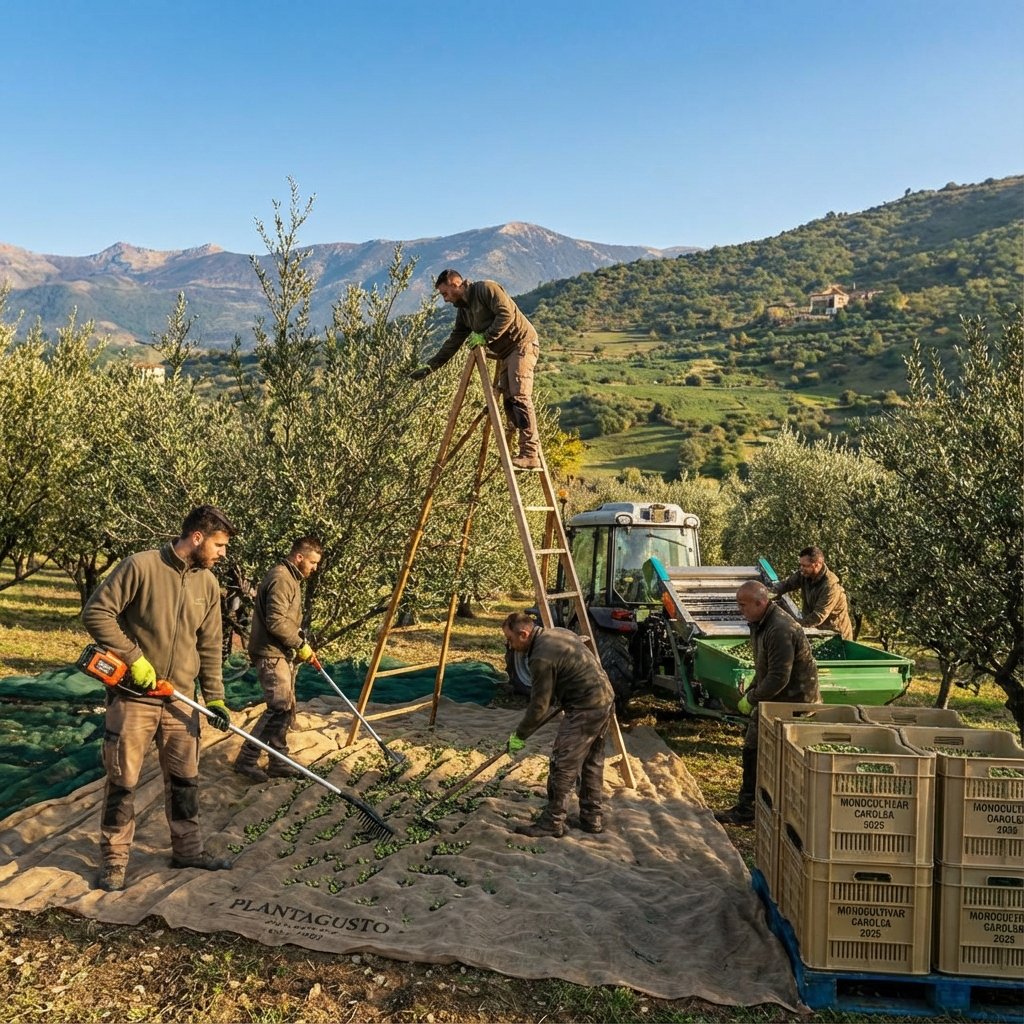
05 · The Carolea Protocol
These parameters come from our production partner's documented Carolea protocol. AureoLife will confirm the method applied to each finished lot in its batch documentation.
For Carolea, the documented protocol sets a maximum interval of four hours between harvest and transformation.
The documented Carolea protocol specifies extraction at 25°C.
The same protocol limits malaxation to 20 minutes.
The oil is made entirely from Carolea olives grown by the single Calabrian grower.
After filtration, our production partner stores the oil in stainless-steel tanks under nitrogen and at controlled temperature.
06 · Lot Control
AureoLife publishes numerical quality and sensory claims only after the finished lot documentation has been reviewed.
No legacy acidity or polyphenol figures are used as proxies for the 2026 production. Any future numerical claim will identify the relevant AureoLife lot and the supporting laboratory result. A total-polyphenol result will not be presented as an authorised EU health claim unless the specific legal conditions for that claim are met.
Origin & Production Questions
These answers clarify the terms most often used when discussing origin, cultivar and production. They are intentionally concise, with technical documents available separately for trade partners.
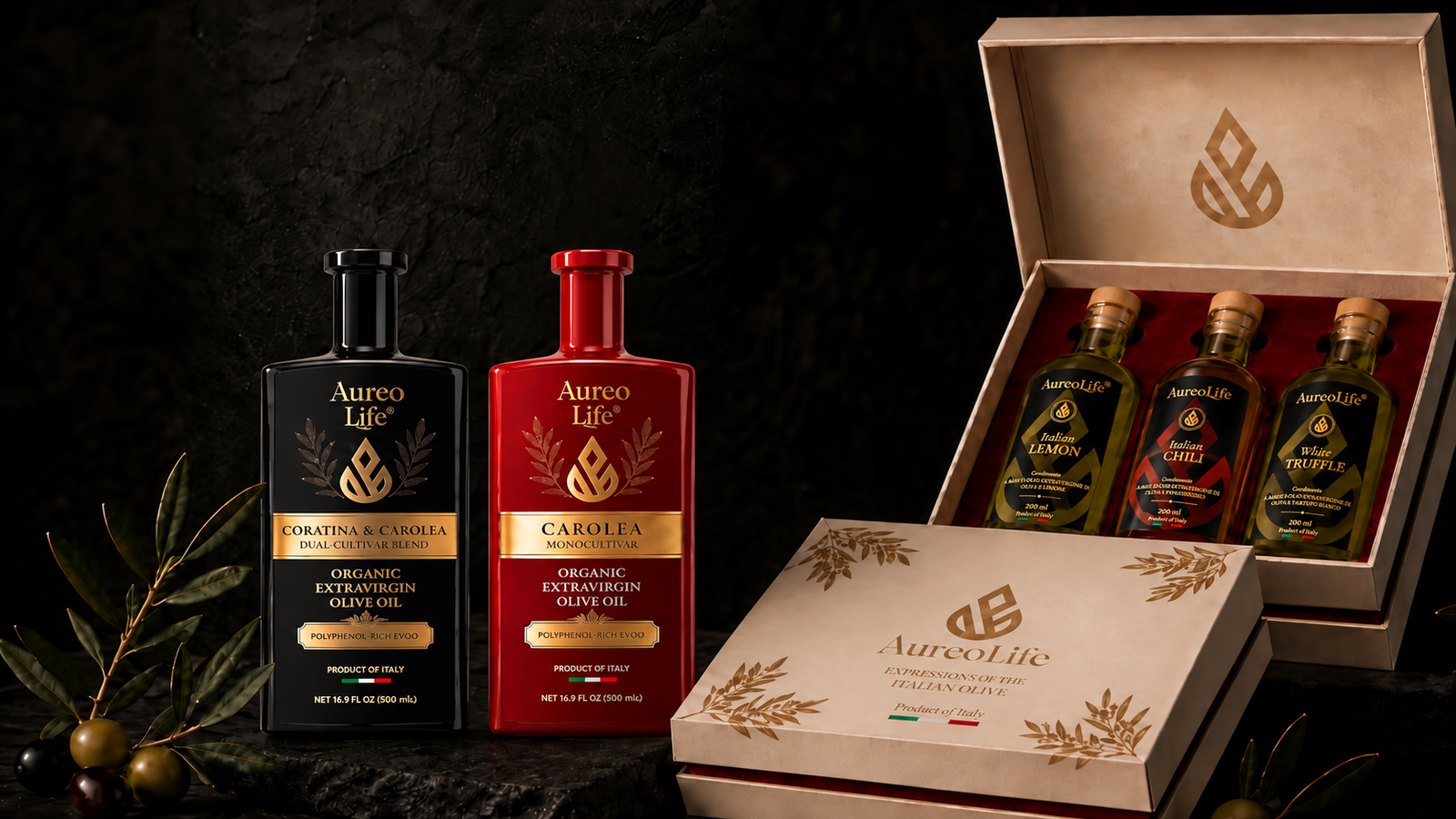
From Producer to Bottle
Discover the Carolea monocultivar and the AureoLife Infused Collection. Finished-lot details will be published after the 2026 production is complete.
Explore the collection